Blog

  • Beyond 3×3: Exploring the Diverse World of Speedcubing Puzzles

    Beyond 3×3: Exploring the Diverse World of Speedcubing Puzzles

    Beyond 3×3: Exploring the Diverse World of Speedcubing Puzzles

    You’ve mastered the 3×3. The satisfying clunk of the final turn, the rush of seeing all the colors align—it’s a feeling like no other. But did you know the universe of speedcubing stretches far beyond the classic cube?

    Beyond 3×3: Exploring the Diverse World of Speedcubing Puzzles
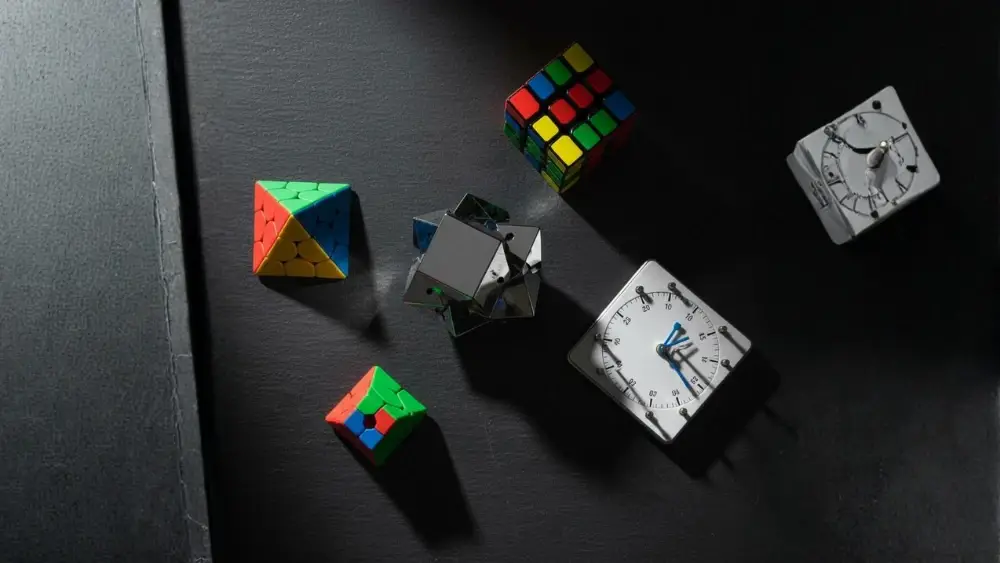
    You’ve mastered the 3×3. The satisfying clunk of the final turn, the rush of seeing all the colors align—it’s a feeling like no other. But did you know the universe of speedcubing stretches far beyond the classic cube? The colorful array of puzzles you see at a JCA competition isn’t just for show; each one represents a unique discipline, a fresh challenge, and a new way to train your brain. Stepping into these events is the key to becoming a more versatile and skilled cuber.

    So, where should you venture next? Let’s explore the exciting puzzles that await you.

    The Speedy Siblings: 2×2 and Pyraminx

    If you’re looking for a fast-paced thrill, the 2×2 cube is your perfect next step. It looks like a 3×3 with the edges sliced off, but don’t be fooled—this is a puzzle of pure corner strategy. With significantly fewer possible combinations, solves are blisteringly fast. It’s a fantastic way to hone your look-ahead skills and finger tricks on a smaller scale, where a single second can make all the difference.

    Similarly, the Pyraminx offers a gateway into the world of non-cubic puzzles. This beautiful, pyramid-shaped puzzle is generally considered one of the easiest WCA events to learn. Its intuitive solving process relies heavily on pattern recognition, making it incredibly satisfying for cubers of all ages. The sheer speed of a Pyraminx solve provides an instant gratification that keeps competitors coming back for more.

    The Twisty & The Unconventional: Skewb and Mirror Cube

    Ready to truly twist your perception? Meet the Skewb. It turns on its corners instead of its faces, creating a completely different rotational dynamic. This puzzle challenges the spatial reasoning you’ve built with cubes, forcing your brain to adapt to a new mechanical language. Mastering the Skewb feels like learning to cube all over again, but in the best way possible.

    Then there’s the Mirror Cube. This is a true test of tactile solving. It looks like a shapeless, metallic blob when scrambled, but it’s actually a 3×3 in disguise. Instead of matching colors, you match shapes and sizes. This puzzle forces you to rely on touch and spatial awareness alone, completely divorcing you from the color-based crutch you’re used to. It’s a mind-bending experience that will deepen your understanding of the 3×3’s fundamental mechanics.

    The Ultimate Tests: 4×4 and Cube Circuit

    For those seeking a significant step up in complexity, the 4×4 is the natural progression. This puzzle introduces you to the concept of centers and parity. Parity errors are unique situations that are impossible on a 3×3, requiring specific algorithms to solve. Conquering the 4×4 isn’t just about being slower on a bigger cube; it’s about learning a new layer of problem-solving that will, ironically, make you a better 3×3 cuber by improving your structural understanding.

    Finally, for the ultimate display of versatility, there’s the Cube Circuit. This isn’t a single puzzle, but a relay of several. It tests your ability to quickly switch gears between different solving mindsets, from the strategic 3×3 to the tactile Mirror Block. It’s the cubing equivalent of a decathlon, celebrating well-rounded skill and mental agility above all else.

    Your Next Challenge Awaits

    The path of a speedcuber is one of constant growth. Each new puzzle you pick up isn’t just a new game—it’s a new way of thinking. At JCA Competitions, we celebrate this diversity. We encourage you to browse the event list for your next competition, be brave, and tick the box for a puzzle you’ve never tried. That single decision could open the door to a whole new dimension of the sport you love. The next puzzle you master might just become your new favorite.
  • Maximize Your Score: A Smart Guide to JCA’s Registration & Fee System

    Maximize Your Score: A Smart Guide to JCA’s Registration & Fee System

    Maximize Your Score: A Smart Guide to JCA’s Registration & Fee System

    You’ve practiced your algorithms, shaved seconds off your personal best, and you’re ready to register for your next JCA competition. As you navigate the registration page, you’ll notice that the system is designed to be as smart and efficient as your solving. 

    Maximize Your Score: A Smart Guide to JCA’s Registration & Fee System

    You’ve practiced your algorithms, shaved seconds off your personal best, and you’re ready to register for your next JCA competition. As you navigate the registration page, you’ll notice that the system is designed to be as smart and efficient as your solving. Understanding the logic behind event selection and fees isn’t just about completing a form—it’s about maximizing your experience and potentially saving money. Let’s break down how it all works, so you can register with confidence.

    The Foundation: Age-Based Event Logic

    The JCA registration system automatically tailors the event list based on the competitor’s age, calculated as of a fixed date (like November 1st, 2025). This ensures a fair and age-appropriate experience for everyone.

    • Under 7 Years Old: No mandatory events. Your child can explore any of the available optional events at their own pace, completely pressure-free.

    • Under 18 Years Old: The system will automatically include the mandatory 3x3x3 event. Additionally, you will see the first four optional events: 2x2x2, Pyraminx, Mini Relay, and Mirror Blocks. This focused list prevents decision fatigue for our younger competitors.

    • 18 and Above (Parents/Adults): The system is streamlined for you. You will only see the mandatory 3x3x3 event. This allows you to participate and get a taste of competition while keeping your focus where you want it.

    Understanding the Fee Structure: Save Where You Can

    The registration fee is a combination of the events you select, with opportunities for significant savings.

    1. Event Fees & Early Bird Discounts:
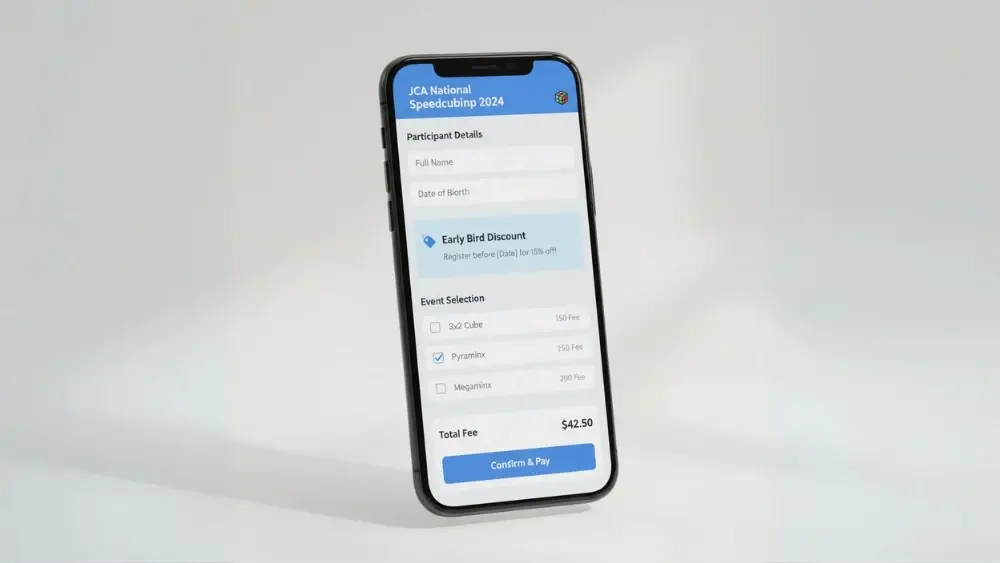
    Every event has a standard fee and a discounted “Early Bird” fee. The Early Bird rate is typically available for a limited time (e.g., the first 15 days after registration opens). This is your first and easiest way to save.

    • Pro Tip: Register as soon as possible after registrations open to lock in the lower Early Bird price for every event you select.

    2. Multi-Event Discounts:
    This is where strategy comes into play. The system automatically applies a discount based on the total number of paid events you select. This is on top of any Early Bird savings!

    • 3 or more events: Get ₹100 off your total.

    • 6 or more events: Get ₹150 off your total.

    • 9 events: Get the maximum ₹250 off your total.

    Putting It All Together: A Fee Calculation Example

    Let’s see this in action for an “Under 18” cuber who registers early and chooses all four available optional events.

    • Mandatory 3×3 (Early Bird): ₹700

    • 2×2 (Early Bird): ₹250

    • Pyraminx (Early Bird): ₹250

    • Mini Relay (Early Bird): ₹150

    • Mirror Blocks (Early Bird): ₹150

    • Subtotal: ₹1500

    • Multi-Event Discount (5 events): -₹100

    • Final Total: ₹1400

    By registering early and participating in multiple events, this cuber saved money on each individual event and received an additional volume discount.

    Final Pro-Tips for a Smooth Registration:

    • JCA Active Cubers: If you belong to this group, don’t forget to select it! The system will prompt you for your JCA ID, ensuring you’re correctly identified in the community.

    • Review Before Paying: The registration form includes a dynamic summary. Always double-check this to ensure your selected events and the calculated total look correct.

    • Plan Your Day: Your event selections determine your schedule. Choosing more events means a fuller, more exciting day, so come prepared with water, snacks, and patience!

    Understanding the registration system is the first step to a successful competition. By leveraging early bird pricing and multi-event discounts, you can make the most of your budget and focus on what truly matters: the thrill of the solve. We look forward to having you compete!

  • How to Choose the Right Events at Your First JCA Competition

    How to Choose the Right Events at Your First JCA Competition

    How to Choose the Right Events at Your First JCA Competition

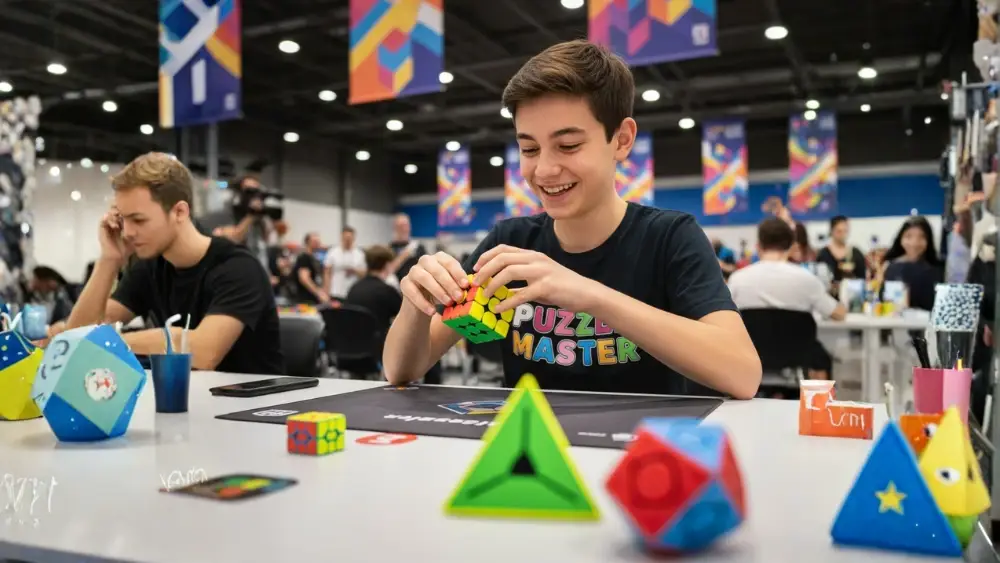
    Stepping into your first speedcubing competition is an exhilarating moment. The air hums with focus, the sound of rapid turning fills the room, and cubers of all ages share in a common passion.

    How to Choose the Right Events at Your First JCA Competition

    Stepping into your first speedcubing competition is an exhilarating moment. The air hums with focus, the sound of rapid turning fills the room, and cubers of all ages share in a common passion. But for a newcomer, the list of events on the registration page can be both exciting and a little overwhelming. How do you choose? Picking the right events is crucial for ensuring a positive, fun, and successful first competitive experience. This guide will help you and your parents navigate the options with confidence.

    Start with the Basics: The Non-Negotiable 3×3

    First things first, let’s talk about the heart of speedcubing: the 3x3x3 cube. For most competitors at a JCA competition, this is the main event. It’s the puzzle everyone knows and the foundation upon which all other skills are often built.

    • For Cubers Under 18: The 3×3 event is typically mandatory. This ensures that every young competitor participates in the core discipline of the sport. Don’t see this as a limitation! View it as your entry into the central community of cubers. It’s your chance to record an official average, see how you perform under pressure, and share the experience with everyone else.

    • For Cubers Under 7: Great news! The 3×3 event is optional for our youngest participants. We understand that the pressure of a timed solve can be daunting. Your child is welcome to watch, soak in the atmosphere, and participate only in the events they feel completely comfortable with.

    Navigating the Optional Events: A World of Possibilities

    Once you’ve understood your relationship with the 3×3, it’s time to explore the wonderful variety of other puzzles. Your age determines which of these you can register for, a system designed to prevent overwhelm and ensure age-appropriate challenges.

    • For Cubers Under 18: You have access to the first four classic optional events: 2×2, Pyraminx, Mini Relay, and Mirror Blocks. This curated list is perfect for beginners.

      • 2×2: A fantastic, fast-paced puzzle. It’s less about complex method and more about intuitive thinking and blazing-fast finger tricks. It’s a great confidence booster.

      • Pyraminx: With its simple mechanics and low move count, the Pyraminx is one of the most accessible WCA puzzles. It’s incredibly satisfying and a perfect first step beyond cubes.

      • Mini Relay: This is pure, team-like fun. It’s a test of versatility as you solve three different puzzles in sequence. It breaks up the individual pressure and adds a playful element.

      • Mirror Blocks: This puzzle will change how you think about cubing. It looks impossible when scrambled, but it’s a 3×3 in disguise, teaching you to solve by shape and feel instead of color.

    • For Parents & Cubers 18+: The focus is solely on the mandatory 3×3 event. This allows you to experience the thrill of competition while supporting your child without the distraction of managing multiple other puzzles.

    Making Your Final Selection: A Strategy for Success

    So, how many events should you actually choose? Here’s a simple strategy:

    1. Start Small: If it’s your very first competition, consider just the mandatory 3×3 and one or two optional events. This lets you manage your energy and focus without feeling rushed between event rounds.

    2. Play to Your Strengths: Have you been practicing the Pyraminx at home? Love the tactile challenge of the Mirror Block? Choose the events you already enjoy! Your first competition should be about celebrating your current skills.

    3. Consider the Schedule: Remember, choosing more events means you’ll have a busier day. It’s a trade-off between experiencing more of the competition and having a more relaxed, social experience.

    Your first JCA competition is a celebration of your journey as a cuber. The goal isn’t just to win, but to learn, make friends, and create memories that will fuel your passion for years to come. By choosing your events wisely, you set the stage for a truly incredible day. We can’t wait to see you there!